Archive: Past Organic Farming Systems
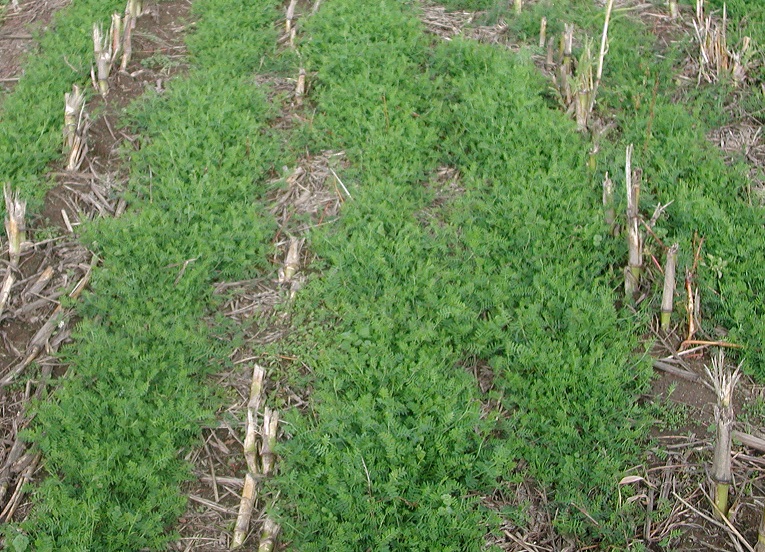
Past Cover Crop Research
Interseeded cover crop demonstrations over various dates:
Hairy vetch relay planted in sweet corn (photos, PDF-Online)
Hairy vetch relay planted in snap bean (photos, PDF-Online).
Hairy vetch relay planted in summer carrot (photos, PDF-Online
Organic Systems Experiment over various dates:
Fall planted rye-hairy vetch (photos, PDF-Online)
Fall planted Italian ryegrass-crimson clover (photos, PDF-Online)
Relay planted hairy vetch (photos, PDF-Online)
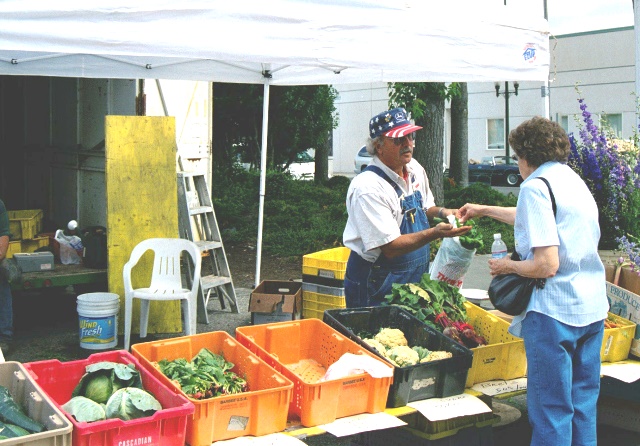
Farmer Focus Groups: Soil Fertility and Water Quality
Organic Farming Systems Research, 2003-2015 Project Overview:
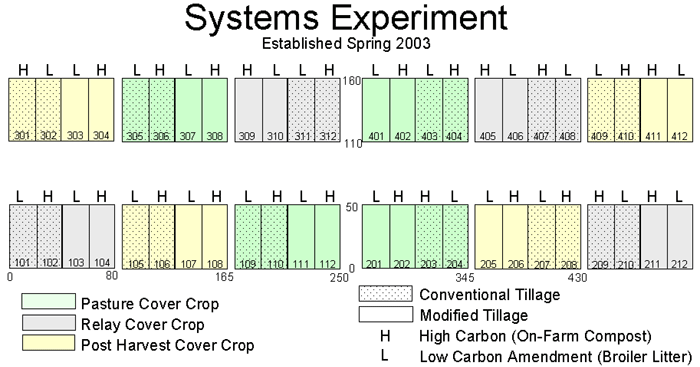
In 2002 we established an organic farming systems experiment for vegetable production on organically certified research land at WSU Puyallup. The experiment compared 12 organic management systems, including three cover cropping systems, 2 tillage treatments, and 2 amendment types, arranged in a split-split plot design. Treatments were chosen based on input from local farmers through workshops, farm visits, surveys, and focus groups. The experiment was terminated in 2015.
Treatments:
- A-Three cover crops
- B-Two tillage systems
- C-Two organic amendments
A-Three cover crops (main plots):
1-Post harvest cover crop: fall planted cereal-legume mix after the vegetable crops were harvested.
2-Relay cover crop: summer planted legume, as a relay crop planted between rows of the cash crop before they were harvested.
3-Pasture crop, fall planted grass-legume mix: managed as pasture for one (prior to 2007) to two (following 2007) growing seasons before incorporation the following growing season. This treatment was planted to cash crops in 2003, 2005, and 2007, 2010, 2013. Pastured poultry were raised on these plots in 2006, 2008, 2009, 2011 and 2012 and sheep were raised on these plots in 2008, 2009, 2011, 2012, and 2014. Additional organic matter beyond chicken and sheep manure was not added to plots following 2007.
B-Two tillage systems to prepare ground (split plots):
1-Conventional: major tillage done with plow, disc, and rototiller as needed.
2-Modified: major tillage done with a spader. This usually prepares a seedbed in a single pass.
C-Two organic amendments (split-split plot):
1-Low carbon amendment: broiler litter, low C:N ratio, low application rate (average 2 dry tons/acre). The broiler litter is piled, self-heated to at least 131 F and turned 5 times to meet organic standards for pathogen reduction.
2-High carbon amendment: compost made on-farm compost, medium C:N ratio, high application rate (average 15 dry tons/acre). The on-farm compost consisted of broiler litter, yard debris, separated dairy solids, and sawdust/straw bedding from the local fair. It was composted in a static pile (actively aerated for 4-6 weeks), then passively cured for 5 months, with temperatures monitored to meet organic standards.
Crop rotation:
Single crops (outlined in red below) were grown the first three years of the experiment, including snap bean, fall spinach following summer cover, and winter squash. Beginning in 2006, each plot was planted to 4 rotation crops each year, with one bed having two consecutive crops. Crops included snap bean, winter squash, broccoli, and lettuce. In 2011 and 2015 winter wheat was grown in the relay and post harvest plots to break up disease cycles. Pasture plots were in pasture 1 year followed by 1 year of vegetable cropping prior to 2007, then 2 years of pasture followed by one year of vegetable cropping thereafter.
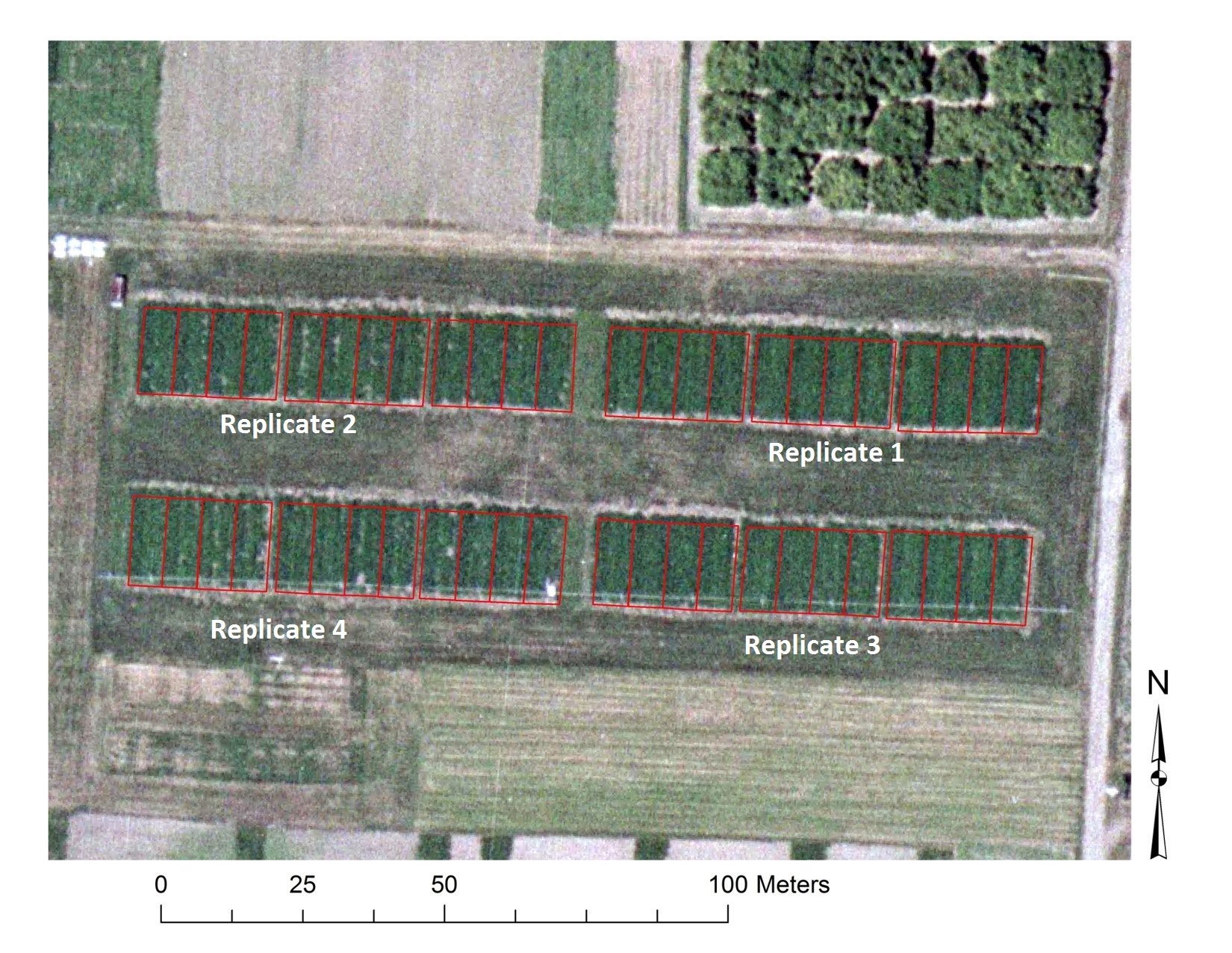
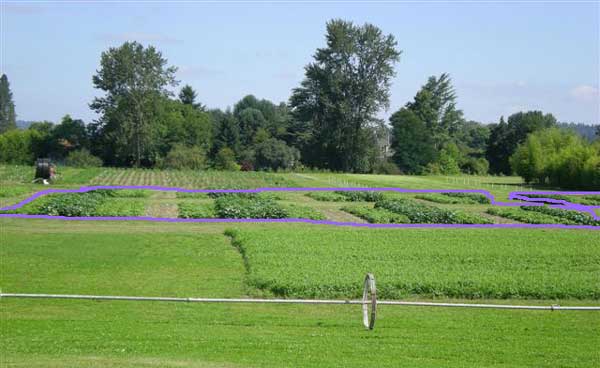
Above, one Replicate (outlined in purple)
Measurements:
- Crop yield and quality
- Soil organic matter, pH, soil test nutrients
- Soil nitrate (early season, mid-season, and post harvest)
- Cover crop yield
- Soil physical measurements (aggregate stability, bulk density, compaction, infiltration)
- Soil biological quality (collembola, nematodes, PLFA, selected enzymes and substrate-induced respiration)
- Weed ecology (weed biomass and/or counts and major species)
- Production costs and value
Results:
Soil Physical Properties, Nitrogen, and Crop Yield in Organic Vegetable Production Systems (PDF-Online). Cogger. C.G., A.I. Bary, E.A. Myhre, A. Fortuna, and D.P. Collins. 2016. Agron. J. 108:1142-1154. doi:12.2134agronj2015.0335
Management Effects on Soil Quality in Organic Vegetable Systems in Western Washington (Request pdf e-copy). Pritchett, K., A.C. Kennedy, and C.G. Cogger. 2011. Soil Sci. Soc. Am. J. 75:605-615.
Links:
WSU Center for Sustaining Agriculture and Natural Resources, information, publications, links, events, programs.
Cultivating Success, sustainable small farm information for Washington and Idaho.
Food Systems (integrates former Small Farms), information, calendar, resources, programs
Slideshows, Photos, and Webinars:
Photo Gallery from certified organic research land (HTML-Online)
Soils and Fertilizer (72 slides, PDF-Online), use browser down scrollbar to advance slides). Soil physical properties, fertilizers, soil amendments, cover crops.
Introduction to Summer Cover Crops (16 slides, PDF-Online, use browser down scrollbar to advance slides)
Closing the Recycling Loop Through Organic Amendments in Agriculture and Gardens (Webinar-Online, Original broadcast date 5 Jan 2011. Slow loading, please wait till after “check our troubleshooting…” goes away. Needs Flash Player to run which is not available on Apple products).
Current & Past Project Support:
USDA Integrated Organic Program CSREES
WSU Center for Sustaining Agriculture and Natural Resource Organic Program
Western Region SARE Grants No. GW06-011, SW03-040
USDA National Institute of Food and Agriculture IFAFS Grant No. 2001-52101-11349